
Industry News
Curation by industry experts
Hot Articles
Popular Tags
Power plant technology upgrades with hidden OPEX impact
Power plant technology upgrades can improve heat rate, emissions performance, automation, and fuel flexibility—but many projects underdeliver because the operating cost impact is underestimated. For buyers, engineers, and project leaders, the real question is not whether an upgrade looks efficient on paper, but whether it reduces lifecycle cost after maintenance burden, spare parts exposure, outage risk, compliance cost, control-system complexity, and operator retraining are fully included. In practice, the most valuable assessment combines procurement benchmarking, technical due diligence, and industrial benchmarking against standards such as IEEE, IMO, ISO, and Tier 4 Final-related requirements where relevant. That is how organizations avoid “efficiency gains” that quietly create higher OPEX over the asset life.
What decision-makers are really trying to understand before approving a power plant technology upgrade
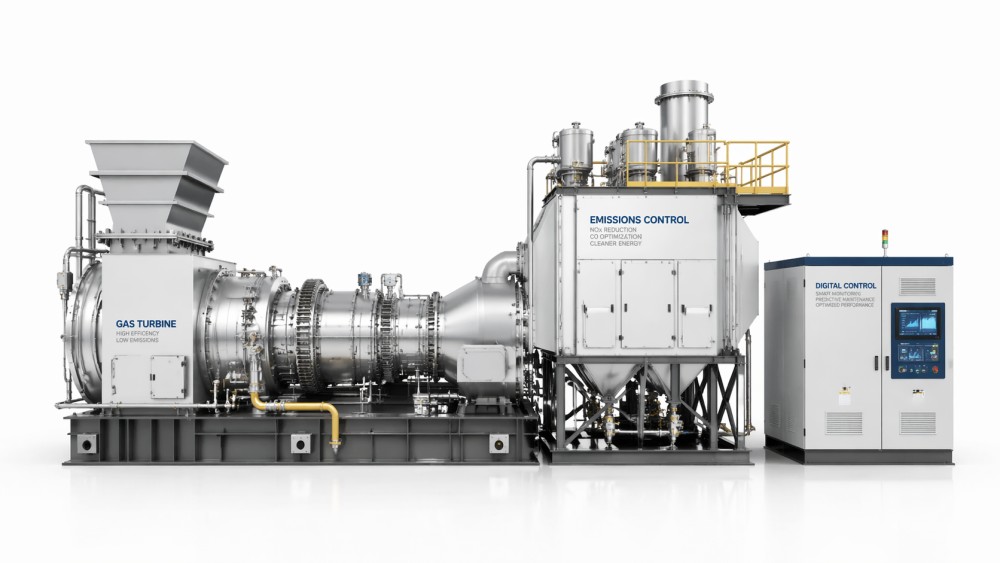
When users search for topics related to power plant technology upgrades with hidden OPEX impact, their intent is usually practical and investment-focused. They want to know where cost escalation actually comes from, how to identify it before procurement, and which upgrade paths are commercially sound under real operating conditions.
For the target audience—researchers, commercial evaluators, enterprise decision-makers, quality and safety teams, and engineering project managers—the main concerns are rarely limited to capital expenditure. They typically want answers to questions such as:
- Will this upgrade improve plant efficiency without increasing maintenance frequency?
- What hidden OPEX items are commonly omitted from vendor proposals or early feasibility studies?
- How do new engine technology, turbine controls, emissions systems, or fuel-flexible configurations affect uptime and service complexity?
- Will compliance with IEEE, IMO, ISO, or Tier 4 Final-related frameworks add recurring cost?
- What is the payback risk if fuel quality, load profile, ambient conditions, or operator capability differ from design assumptions?
That means the article should focus less on generic upgrade trends and more on cost visibility, technical-commercial tradeoffs, procurement benchmarks, and risk screening methods that support investment decisions.
Where hidden OPEX usually appears in power plant upgrades
Hidden OPEX rarely comes from a single line item. It typically emerges from the interaction between new hardware, existing plant conditions, operating strategy, and compliance obligations.
The most common cost categories include:
- Maintenance interval compression: A higher-performance engine or turbine configuration may improve output or efficiency but reduce component life under cycling duty, poor fuel quality, or high ambient temperatures.
- Spare parts and service dependency: Proprietary controls, sensors, combustor parts, aftertreatment systems, and digital monitoring subscriptions can lock the plant into higher long-term vendor dependence.
- Balance-of-plant adjustments: Upgrades to primary movers often require secondary spending on cooling systems, lubrication circuits, transformers, fuel treatment, exhaust handling, switchgear integration, or vibration management.
- Operational retraining: More advanced automation, AI-managed uptime platforms, or dual-fuel capability may improve responsiveness but require additional operator training, revised SOPs, and updated maintenance planning.
- Compliance monitoring and reporting: Emissions upgrades or fuel-flexibility retrofits can increase testing frequency, documentation workload, and instrumentation calibration cost.
- Outage and commissioning risk: Integration with legacy control systems, IEEE-aligned electrical architecture, or marine and utility safety requirements can extend commissioning windows and increase lost production cost.
In other words, an upgrade that appears attractive in a vendor heat-rate comparison can still produce weaker economics if it adds recurring maintenance events, higher parts consumption, or more complicated outage planning.
Why “efficiency improvement” does not automatically mean lower operating cost
One of the most common evaluation mistakes is treating thermal efficiency as the main indicator of economic value. Efficiency matters, but it does not stand alone.
For example, a combustion upgrade on an industrial gas turbine may reduce fuel consumption per MWh. However, if the same upgrade increases hot-section inspection frequency, requires premium fuel conditioning, or narrows the acceptable operating window, the total OPEX profile may worsen. Similarly, a reciprocating engine retrofit designed for fuel flexibility—such as hydrogen blending or ammonia readiness—may improve strategic resilience but increase wear, lubrication demand, ignition-system complexity, and safety management cost.
For enterprise buyers and project leaders, the better question is: What is the net operating effect per year under my actual duty cycle?
That calculation should include:
- Fuel savings under realistic load factors
- Incremental maintenance labor and outage hours
- Consumables and replacement parts cost
- Software, monitoring, and diagnostics subscriptions
- Emission compliance verification and reporting cost
- Insurance, safety, and risk-control implications
- Production loss from lower availability during transition or early-life tuning
This is especially important in critical infrastructure sectors such as data centers, utility peaking assets, marine power systems, and industrial self-generation, where uptime has a direct financial value far beyond fuel cost alone.
How procurement benchmarking helps expose hidden lifecycle cost before contract award
Procurement benchmarking is one of the most effective ways to identify hidden OPEX before a technology upgrade is approved. Instead of comparing proposals only on nameplate performance, decision-makers should benchmark vendors across technical, service, and operational dimensions.
Useful benchmark areas include:
- Maintenance philosophy: Compare overhaul intervals, inspection scope, required tooling, and field-service availability.
- Parts ecosystem: Review lead times, localization options, consumables pricing, and dependence on proprietary modules.
- Control integration: Assess compatibility with existing DCS, protection logic, UPS systems, and electrical architecture governed by IEEE-related practices.
- Fuel tolerance: Validate real performance under expected fuel variability, not only under ideal test conditions.
- Compliance burden: Determine what ongoing testing, certification, and documentation the plant must sustain after upgrade.
- Availability guarantees: Distinguish between contractual availability language and actual field performance in comparable installations.
For B2B buyers, this benchmarking process often reveals that two upgrade packages with similar CAPEX can have materially different five-year OPEX profiles. The lower quoted price may carry higher service lock-in, while the more expensive option may offer a stronger spare-part strategy, better maintainability, and lower downtime exposure.
Which upgrade types most often create underestimated OPEX risk
Not all upgrade categories carry the same hidden cost profile. Some of the most common high-risk areas include:
- Digital control and automation retrofits: These can improve responsiveness and diagnostics but may add licensing fees, cybersecurity requirements, integration troubleshooting, and specialist dependency.
- Emissions control upgrades: SCR, oxidation catalysts, particulate controls, and related systems can bring reagent cost, backpressure effects, sensor maintenance, and compliance testing obligations.
- Fuel-flexibility conversions: Hydrogen, ammonia, dual-fuel, and synthetic fuel readiness projects often involve materials compatibility, derating risk, combustion tuning, and expanded safety controls.
- Output uprates: Uprating turbines or engines may increase thermal and mechanical stress, accelerating wear on rotating and hot-section components.
- Hybridization with battery or UPS systems: These projects can improve resilience but add lifecycle management demands across inverters, thermal systems, controls, and grid-interface coordination.
This does not mean these upgrades should be avoided. It means they should be evaluated with a lifecycle lens that reflects the plant’s operating mission, regulatory environment, and maintenance capability.
What technical and commercial teams should check during due diligence
A strong upgrade review process should combine engineering scrutiny with commercial realism. The following due diligence questions are especially useful:
- What assumptions drive the projected savings? Check fuel price, load factor, outage frequency, ambient conditions, and expected dispatch profile.
- What new recurring costs appear after commissioning? Include service agreements, software subscriptions, calibration, consumables, and specialist labor.
- What are the failure modes introduced by the upgrade? Review reliability data, field references, and component criticality.
- How does the upgrade affect maintainability? Consider access, tooling, skill requirements, and outage duration.
- What standards and regulations apply? Depending on asset class and geography, this may involve IEEE, ISO, IMO, emissions frameworks, and sector-specific requirements.
- Is the plant organization ready to operate the upgraded system? A technically strong solution may still fail commercially if the site lacks trained staff, spare strategy, or digital support maturity.
For quality and safety managers, it is equally important to verify whether the upgrade changes hazard profiles, shutdown logic, alarm management, fuel-handling procedures, or environmental reporting obligations.
How to build a more accurate OPEX model for power plant upgrade decisions
To avoid optimistic projections, organizations should move beyond a simple pre-upgrade vs. post-upgrade efficiency comparison and build an OPEX model around actual operating reality.
A practical model should include:
- Base operating cost: fuel, labor, routine maintenance, and consumables
- Incremental recurring cost: new inspections, reagents, software, subscriptions, compliance activities, and training refresh
- Event-based cost: forced outage probability, major component replacement, and commissioning delay exposure
- Scenario variation: part-load operation, poor fuel quality, hot climate, cycling duty, and emergency dispatch conditions
- Opportunity cost: value of lost production, lower availability, or delayed capacity release
Decision-makers should also run best-case, expected-case, and stress-case scenarios. This is essential for high-performance thermal hardware and critical power assets where a small reliability deviation can erase expected efficiency gains.
When a technology upgrade is worth the added operating complexity
An upgrade with higher OPEX can still be the right decision if it delivers strategic value that outweighs the additional operating burden. For example:
- It materially reduces regulatory exposure or future compliance risk
- It enables access to lower-cost or more secure fuel sources
- It improves resilience for mission-critical applications
- It supports decarbonization targets required by investors, customers, or regulators
- It extends asset life and postpones full replacement CAPEX
The key is transparency. If the organization understands the hidden OPEX and still sees superior long-term value, the investment case is stronger and easier to defend internally.
Conclusion: the best upgrade decisions come from lifecycle visibility, not headline performance claims
Power plant technology upgrades should not be judged by efficiency, output, or emissions performance alone. The most important question is whether the upgrade improves total operational value over time. Hidden OPEX often appears in maintenance complexity, spare parts dependence, digital service fees, compliance activities, integration challenges, and uptime risk—areas that are easy to understate during early evaluation.
For research teams, commercial evaluators, engineering leaders, and enterprise decision-makers, the most effective approach is to combine technical intelligence, procurement benchmarking, and standards-aware due diligence. By comparing engine technology, mechanical hardware, and high-performance thermal hardware against actual site conditions and applicable frameworks such as IEEE, IMO, ISO, and Tier 4 Final-related requirements, organizations can make upgrade decisions that are not only technically advanced, but commercially durable.
In short, the best-performing power plant upgrade is not the one with the most impressive brochure metrics. It is the one that delivers measurable efficiency, manageable complexity, and predictable lifecycle cost in the real world.
Recommended News