
Industry News
Curation by industry experts
Hot Articles
Popular Tags
Engine technology choices that age badly after retrofit
Retrofitting can extend asset life, but some engine technology choices become expensive mistakes once fuel pathways, emissions rules, maintenance realities, and uptime expectations change. For buyers, engineering leaders, project owners, and safety or quality teams, the key question is not whether a retrofit works on commissioning day. It is whether the selected platform will still be technically compliant, economically defensible, and operationally resilient three to ten years later. In practice, retrofit decisions age badly when they lock assets into narrow fuel compatibility, create hidden controls complexity, raise lifecycle parts risk, or leave too little margin against Tier 4 Final, IMO, or site-specific reliability requirements. The smartest evaluation approach is to benchmark retrofit options against future operating scenarios, not just current capex or short-term performance gains.
What users searching this topic usually need to know before approving a retrofit
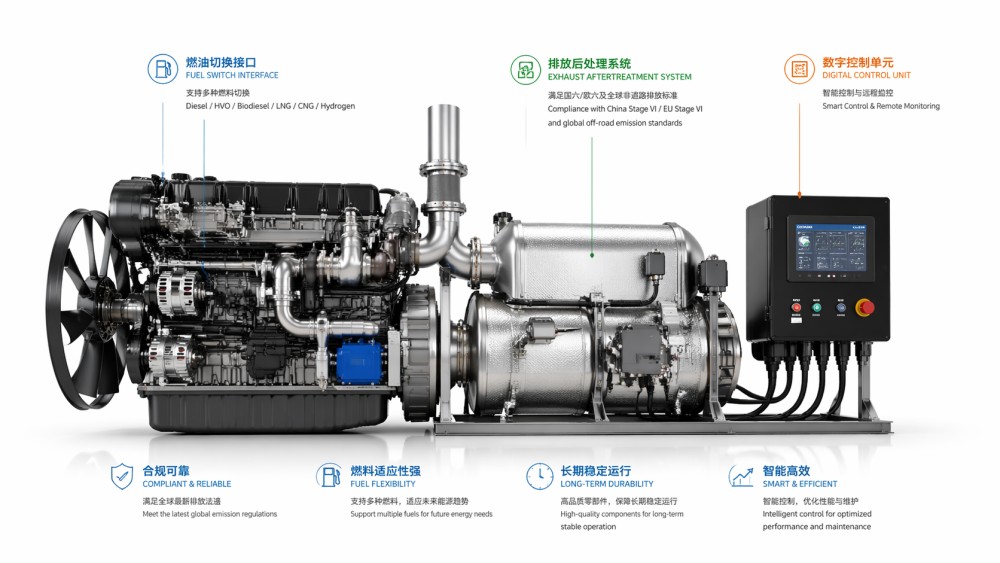
The core search intent behind “Engine technology choices that age badly after retrofit” is highly practical and decision-oriented. Most readers are not looking for generic explanations of retrofit engineering. They want to identify which technology paths tend to become liabilities after implementation, why those failures happen, and how to screen them out before procurement or project approval.
For the target audience here, the highest-priority concerns usually fall into five areas:
- Regulatory durability: Will the retrofit still align with tightening emissions requirements, marine compliance obligations, grid-site permits, or customer ESG commitments?
- Fuel pathway risk: Does the engine platform remain viable if the site shifts from conventional diesel or gas toward dual-fuel, hydrogen blends, ammonia readiness, or other decarbonization pathways?
- Uptime impact: Will the retrofit improve reliability in real operating conditions, or introduce controls, thermal, lubrication, or aftertreatment issues that reduce availability?
- Lifecycle economics: Are projected savings real once maintenance intervals, spares availability, control system integration, derating, and technician requirements are included?
- Technology lock-in: Does the retrofit commit the owner to a narrow vendor ecosystem, aging electronic architecture, or non-scalable balance-of-plant design?
That means the most useful article is not one that lists retrofit technologies equally. It should instead focus on the choices most likely to disappoint under changing fuel, emissions, and uptime demands, and give readers a structured way to judge suitability before capital is committed.
Which engine technology choices most often age badly after retrofit
Not every problematic retrofit fails immediately. Many look attractive during proposal review because they promise lower capex, faster installation, or “drop-in” compatibility. The problem emerges later, when operating conditions evolve faster than the retrofit architecture can adapt.
1. Single-fuel retrofit paths in assets facing fuel uncertainty
A retrofit that reinforces dependence on one fuel can age badly when procurement strategy, regulation, or customer contracts start favoring fuel flexibility. This is especially relevant in power generation, marine propulsion, and critical backup applications where operators increasingly evaluate gas, HVO, methanol, hydrogen blends, or future ammonia-related pathways. If an engine upgrade improves short-term efficiency but limits future conversion economics, it may become stranded before the mechanical asset reaches end of life.
2. Emissions packages with weak real-world margin
Some retrofits are engineered to pass current limits on paper but operate too close to compliance thresholds in variable ambient conditions, part-load profiles, or transient duty cycles. Systems with narrow calibration windows, complex EGR behavior, or aftertreatment that is highly sensitive to temperature and sulfur exposure often age poorly. As duty cycles change, these engines can become expensive to tune, difficult to certify, or operationally unstable.
3. Controls retrofits layered onto old mechanical platforms without full systems integration
Digital governors, combustion control upgrades, and AI-assisted monitoring can create major value, but only when sensor architecture, actuator response, thermal behavior, and protection logic are integrated end to end. A common failure pattern is adding modern controls to legacy engines whose wiring, mechanical response profile, or support ecosystem was never designed for that degree of coordination. These solutions often underperform not because automation is flawed, but because the engine-control package was never treated as a unified system.
4. High-output uprates that consume reliability margin
An uprate can look financially compelling when demand is rising and replacement is deferred. But if the retrofit pushes thermal loading, cylinder pressures, turbocharger stress, or cooling system limits too far, the asset may lose the reliability reserve needed for real-world uptime. What initially appears to be a productivity gain can become a maintenance-intensive configuration with more unplanned outages and shorter overhaul intervals.
5. Vendor-specific architectures with weak long-term parts and service resilience
A retrofit ages badly when the owner becomes dependent on proprietary controllers, scarce injectors, discontinued emissions components, or a narrow technician network. This is a major issue for remote plants, marine fleets, and backup power installations where service delays directly affect business continuity. Long-term maintainability should be treated as a first-order design criterion, not a procurement footnote.
Why these retrofit choices become liabilities under modern industrial conditions
The reason poorly chosen engine retrofits age badly is simple: the decision is often made around the current engine problem, while the asset will actually live inside a future operating environment.
That future environment is defined by several trends:
- Tighter emissions accountability: Compliance is no longer only about initial certification. Owners are expected to sustain performance across real operating conditions and evolving audits.
- Greater fuel uncertainty: Energy security and decarbonization planning increasingly reward platforms that can accommodate multiple fuel strategies.
- Higher uptime expectations: Data centers, hospitals, industrial campuses, utilities, ports, and marine operators cannot absorb reliability losses caused by retrofit complexity.
- More software dependence: Engines are increasingly managed through advanced controls, remote monitoring, predictive maintenance, and integrated plant logic. Weak control architecture ages faster than strong iron.
- Longer asset extension strategies: Owners are using retrofits to defer replacement for longer periods, which magnifies every design weakness over time.
In other words, the retrofit that ages badly is usually the one designed for static assumptions: fixed fuel, stable regulation, predictable loads, readily available spares, and unchanged operating philosophy. That assumption set no longer matches how critical infrastructure is managed.
What decision-makers should evaluate before comparing retrofit proposals
For business evaluators and enterprise decision-makers, the right question is not “Which retrofit is cheapest?” but “Which retrofit remains viable across compliance, fuel, uptime, and service scenarios?” A sound evaluation framework should include the following.
Lifecycle compliance headroom
Do not ask only whether the solution meets current Tier 4 Final, IMO, or local permit requirements. Ask how much margin exists under part-load operation, ambient variation, transient events, and anticipated future rule tightening. Compliance headroom is far more valuable than paper compliance.
Fuel adaptability
Assess whether the retrofit supports realistic future fuel scenarios, including dual-fuel conversion potential, hydrogen blending tolerance, combustion stability under varying gas quality, material compatibility, and control flexibility. Even if alternative fuels are not immediate, the ability to adapt can protect long-term asset value.
Uptime economics, not just fuel economics
A retrofit that saves fuel but increases forced outage risk can destroy overall value. Quantify impact on availability, mean time between service events, restart reliability, operator dependency, and spare parts lead times. For critical facilities, uptime usually outweighs theoretical efficiency gains.
Integration burden
Some retrofit packages look modular in brochures but require major changes in cooling, exhaust routing, sensors, switchgear interfaces, shaft alignment, or safety logic. Evaluate total integration complexity, outage window requirements, and commissioning risk, especially where site access or shutdown tolerance is limited.
Service ecosystem strength
The best technical package can still be the wrong choice if field support is thin, training requirements are excessive, or software access is tightly restricted. Ask who can diagnose, tune, certify, and maintain the system five years from now.
How engineering, project, safety, and quality teams can spot a retrofit that will not age well
Execution-level teams often see the warning signs earlier than procurement does. The following indicators are especially useful during technical review, FAT/SAT planning, and risk assessment.
- The vendor relies on ideal fuel quality assumptions with limited tolerance analysis.
- Emissions performance is demonstrated mainly at steady-state points rather than real duty-cycle behavior.
- Control logic is upgraded, but sensor redundancy, cybersecurity, or fallback modes are not clearly defined.
- Thermal management changes are treated as secondary even though output, combustion mode, or aftertreatment behavior has changed significantly.
- Documentation around failure modes, alarm strategy, operator response, and maintenance intervals is vague.
- Spare parts lists include specialized components with uncertain lead times or single-source dependency.
- The retrofit requires tighter operating discipline than the site can reliably sustain.
Quality and safety stakeholders should also check whether the retrofit introduces new failure modes that the organization is not prepared to manage. For example, a dual-fuel conversion may improve fuel strategy but create new risks around gas handling, venting, ignition control, enclosure ventilation, and shutdown logic. Likewise, low-emission combustion systems may demand cleaner fuel, tighter thermal control, and more consistent maintenance execution than legacy teams are used to. A technology can be excellent in principle and still be the wrong fit for the site’s operating maturity.
Where retrofits still make sense and how to choose options that age well
Avoiding badly aging retrofit choices does not mean avoiding retrofits altogether. In many cases, retrofit remains the best capital strategy, especially when the base asset is mechanically sound, outage windows are limited, and full replacement would create unacceptable cost or schedule exposure.
The retrofit options that tend to age well usually share several traits:
- They preserve or improve fuel flexibility rather than narrowing it.
- They provide emissions margin under realistic operating profiles, not just test conditions.
- They are designed as whole-system upgrades, including controls, cooling, safety, and maintainability.
- They protect reliability margin instead of consuming it for short-term output gains.
- They come with a credible long-term service and parts strategy.
- They align with recognized standards and operating contexts relevant to the asset class, including ISO, Tier 4 Final, IMO, and IEEE-linked reliability considerations where applicable.
A practical selection method is to score each retrofit proposal across four weighted dimensions: future compliance resilience, fuel pathway flexibility, uptime impact, and serviceability. This tends to reveal which “low-cost” solutions are actually fragile once broader business conditions are considered.
Final judgment: the retrofit choice that ages badly is usually the one optimized for today alone
For industrial engines, marine propulsion systems, utility-scale emergency power, and other critical assets, the most dangerous retrofit decision is not necessarily the most advanced or the most conservative. It is the one made with too narrow a time horizon. Engine technology choices age badly after retrofit when they lock the asset into rigid fuel assumptions, thin emissions margin, high integration complexity, or weak long-term support. Those weaknesses may stay hidden at commissioning, then surface as compliance pressure, uptime losses, or rising lifecycle cost.
The better path is to evaluate retrofit technologies as long-duration operating strategies. If a proposal improves performance while maintaining regulatory resilience, fuel optionality, maintainability, and real-world reliability, it is far more likely to create lasting value. If it only looks attractive under today’s assumptions, it should be treated as a future liability candidate, not a strategic upgrade.
Recommended News