
Industry News
Curation by industry experts
Hot Articles
Popular Tags
IMO regulations are shifting methanol engine design priorities
As IMO regulations tighten, methanol engine design is moving beyond compliance toward smarter engine technology and industrial benchmarking. For decision-makers focused on procurement benchmarking, technical intelligence, and power plant technology, this shift reshapes how mechanical hardware and high-performance thermal hardware are evaluated against Tier 4 Final and IEEE standards. Understanding these priorities is now essential for safer investment, project planning, and long-term fleet performance.
The core answer is straightforward: IMO rules are no longer influencing methanol engines only at the emissions-control layer. They are changing the full design logic of the engine platform itself—combustion strategy, fuel handling architecture, safety systems, digital controls, materials selection, lifecycle maintenance, and compliance documentation. For shipowners, EPC teams, procurement leaders, and technical evaluators, the key issue is not whether methanol can support decarbonization goals. It is whether a given methanol engine design can deliver compliant performance, operational reliability, crew safety, and acceptable total cost across real-world duty cycles.
What decision-makers are really asking when methanol engine design priorities shift
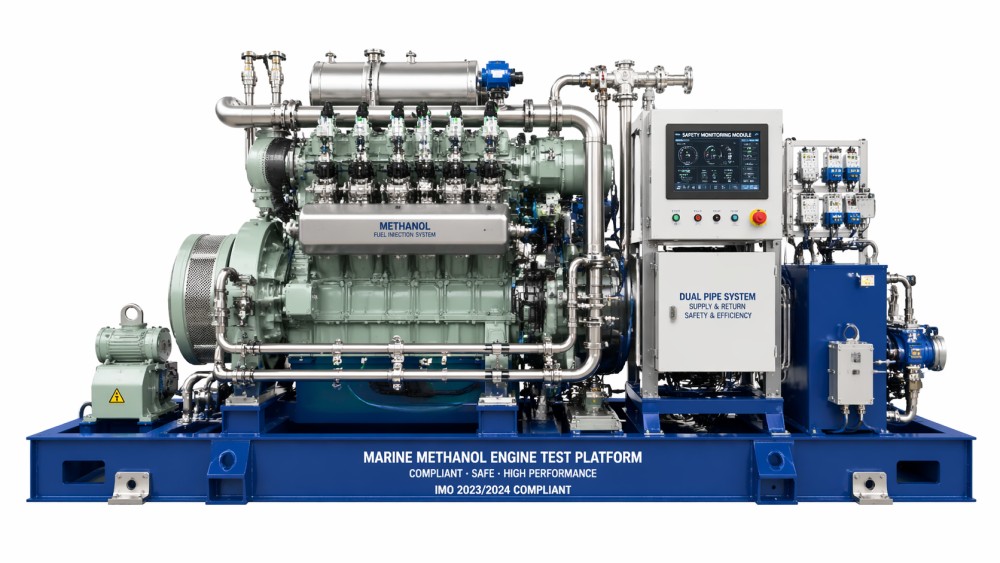
When users search for topics around IMO regulations and methanol engine design, they are usually not looking for a generic explanation of marine decarbonization. They want to know what has practically changed in engine selection, design evaluation, and investment risk.
For most B2B readers, the real questions are:
- Which IMO rules are forcing design changes in methanol-fueled engines?
- How do these changes affect safety, efficiency, uptime, and maintenance?
- What should buyers and engineering teams benchmark before selecting an engine platform?
- Will today’s methanol engine architecture remain viable as regulations continue to tighten?
- How should teams compare methanol engines with LNG, ammonia-ready, dual-fuel, or conventional low-carbon alternatives?
This is why the discussion has shifted from “Can methanol work?” to “Which methanol engine design philosophy is robust enough for future compliance and industrial reliability?” That distinction matters for capital planning and fleet strategy.
Why IMO rules are changing more than emissions hardware
Historically, many regulatory responses in engine development focused on add-on compliance measures: aftertreatment, monitoring, fuel switching logic, or operational constraints. In the methanol segment, that is no longer sufficient. IMO regulatory pressure increasingly affects the core design of the engine because methanol introduces a different combustion and risk profile than conventional marine fuels.
Several regulatory and compliance drivers are shaping this transition:
- Carbon intensity pressure: Decarbonization pathways are pushing operators toward fuels that can support lower lifecycle emissions, especially when green methanol becomes more available.
- NOx and local emissions expectations: Engine design must balance carbon strategy with emission control performance under varying loads and operating conditions.
- Fuel safety requirements: Methanol is liquid at ambient conditions, which simplifies some logistics versus cryogenic fuels, but it is toxic, corrosive to some materials, and has different fire and handling risks.
- Operational transparency: Monitoring, control integration, and documentation are becoming more important for demonstrating compliant and stable operation.
- Future-proofing pressure: Asset owners need engine platforms that can remain commercially and technically relevant as IMO requirements evolve.
As a result, methanol engine developers are prioritizing integrated design changes rather than isolated compliance fixes. This is a major reason why benchmarking now requires cross-functional evaluation, not just a review of emissions certificates.
Which design priorities are now moving to the top of the methanol engine agenda
For engineering and procurement teams, the most important shift is that methanol engine performance is increasingly being judged on system-level resilience. The strongest platforms are not simply those that can run on methanol, but those designed around methanol’s operational realities.
1. Combustion stability across variable operating conditions
Methanol has different ignition and flame characteristics compared with conventional marine fuels. This affects combustion control, pilot fuel strategy in dual-fuel engines, low-load stability, cold-start behavior, and transient response. Engine designers are therefore investing more in combustion optimization, injection timing precision, and adaptive control logic.
For buyers, this means low-load performance and transient reliability should be evaluated carefully, especially for vessels with irregular duty cycles.
2. Fuel injection and fuel supply architecture
IMO-driven compliance expectations are increasing the value of precise fuel metering, leak prevention, and rapid fault isolation. Methanol-compatible injection systems, pumps, seals, and piping layouts are now strategic design elements. Small weaknesses in fuel system design can lead to safety incidents, efficiency penalties, or higher maintenance frequency.
3. Materials compatibility and corrosion management
Methanol can challenge elastomers, coatings, seals, and certain metallic components. As regulations place more emphasis on safe operation and risk control, material selection becomes central to engine life and maintenance planning. A technically attractive methanol engine may still be a poor asset if long-term material degradation drives unplanned outages.
4. Integrated safety engineering
Safety is no longer a support topic. It is a design priority. Methanol’s toxicity, lower flash point characteristics in some contexts, and invisible flame risk require careful attention to ventilation, leak detection, double-walled piping, emergency shutdown logic, drainage design, fire protection, and crew protection interfaces.
For quality and safety managers, this is one of the clearest areas where supplier maturity can be separated from marketing claims.
5. Control systems and automation
As fuel flexibility and compliance monitoring become more complex, engine control units, sensor networks, and diagnostics are becoming decisive. AI-managed uptime and predictive maintenance capabilities are increasingly relevant in high-value fleets and critical power applications. A methanol engine designed with advanced monitoring can reduce risk by detecting instability, leakage trends, injector wear, or abnormal combustion before failure occurs.
6. Lifecycle serviceability
The design priority is shifting from initial operability to lifecycle manageability. Buyers want to know how frequently wear components require replacement, whether spare parts logistics are mature, how easy it is to isolate and service fuel-system components, and whether technician training is available globally.
How these design shifts affect procurement benchmarking and business evaluation
For commercial and technical decision-makers, the practical consequence is clear: methanol engine procurement can no longer be based mainly on nameplate output, fuel flexibility claims, and headline emissions alignment.
A stronger benchmarking framework should include the following questions:
- Compliance depth: Is the engine merely compliant under limited test conditions, or designed for durable compliance across realistic operating profiles?
- Fuel-system integrity: What redundancy, leak detection, and fault containment features are built into the methanol handling system?
- Safety architecture: How robust are the fire, ventilation, gas detection, shutdown, and crew protection systems?
- Maintenance burden: What evidence exists on injector life, seal durability, corrosion resistance, and service intervals?
- Control sophistication: Does the platform support condition monitoring, automated diagnostics, and integration with vessel energy management systems?
- Retrofit and integration complexity: How much redesign is required at the vessel, plant, or auxiliary systems level?
- Supplier maturity: Does the OEM have verifiable deployment history, reference installations, and technical support capability?
This is particularly important for enterprise procurement teams comparing methanol engines with other primary mover technologies. In many cases, the better commercial choice is not the engine with the lowest stated fuel consumption, but the one with the strongest combination of regulatory resilience, operational predictability, and maintainability.
What engineers, project managers, and safety teams should examine before approval
If the project is moving from market screening into technical evaluation, teams should avoid broad assumptions and focus on failure points that become more important under stricter IMO oversight.
Key review areas include:
- Hazard and operability analysis: Confirm whether methanol-specific scenarios have been addressed in design reviews and risk studies.
- Control response under upset conditions: Review how the engine handles misfire, fuel contamination, pressure fluctuation, leak detection events, and emergency shutdown sequences.
- Compatibility with classification and site-specific requirements: Ensure that vessel class, port rules, flag-state expectations, and internal corporate standards are aligned.
- Auxiliary system impact: Assess how the methanol engine affects storage, bunkering, ventilation, fire suppression, drainage, and operator training requirements.
- Documentation quality: Strong OEM documentation often signals stronger engineering discipline and smoother project execution.
For organizations operating beyond marine transportation—such as hybrid power platforms, port-side energy systems, or critical industrial backup applications—the same logic applies. Methanol engine design should be reviewed as part of a broader high-performance thermal hardware and compliance ecosystem, not as a standalone machine purchase.
Where methanol engines fit in a broader industrial compliance and technology strategy
Methanol is gaining strategic traction because it offers a plausible pathway between decarbonization pressure and operational practicality. Compared with some alternatives, it can simplify storage and logistics. But tighter IMO regulation means this advantage only holds if engine design quality keeps pace with regulatory and safety complexity.
That is why industrial benchmarking is becoming more valuable. Serious evaluators increasingly compare methanol engine platforms against wider standards and adjacent technologies, including Tier 4 Final thinking on emissions control discipline, IEEE-style expectations for system reliability and monitoring in critical infrastructure, and best practices from gas engines, dual-fuel marine systems, and utility-scale backup power assets.
For G-PPE readers, the strategic takeaway is that methanol engine selection is now an interdisciplinary decision. It touches procurement risk, engineering integration, compliance planning, digital monitoring, and long-term asset resilience. The winning platform is likely to be the one that performs well across all of these dimensions—not just on a fuel-transition narrative.
Conclusion: the real priority is no longer methanol adoption, but methanol design quality
IMO regulations are shifting methanol engine design priorities from basic fuel capability toward integrated compliance, safety, and lifecycle performance. That shift matters because it changes how assets should be specified, benchmarked, and approved.
For information researchers, business evaluators, project leaders, and safety-focused stakeholders, the most useful conclusion is this: do not treat methanol readiness as a binary feature. Treat it as a system-level engineering standard. The more regulations tighten, the more value will move toward engines with proven combustion control, safer fuel architecture, stronger materials compatibility, smarter automation, and lower lifecycle uncertainty.
In practical terms, organizations that benchmark methanol engines through a technical, regulatory, and operational lens will make better procurement decisions than those relying on decarbonization headlines alone. That is where real commercial confidence—and long-term fleet performance—will be built.
Recommended News