
Industry News
Curation by industry experts
Hot Articles
Popular Tags
Tier 4 Final compliance problems in new gen-sets
Tier 4 Final compliance in new gen-sets is no longer a narrow emissions issue—it directly affects procurement benchmarking, technical intelligence, and long-term asset risk. For decision-makers evaluating engine technology, power plant technology, and mechanical hardware, understanding how high-performance thermal hardware aligns with Tier 4 Final, IEEE standards, and IMO regulations is essential to stronger industrial benchmarking and more reliable project outcomes.
For buyers, project leaders, and quality teams, the problem is rarely limited to passing an emissions test. In practice, Tier 4 Final can change engine packaging, cooling strategy, fuel consumption, maintenance planning, load acceptance behavior, and total lifecycle cost over 10–15 years. That makes compliance a board-level issue for data center backup power, utility support assets, marine-adjacent installations, and industrial emergency power systems.
Within the G-PPE perspective, the most important question is not whether a new gen-set is labeled compliant, but whether its compliance architecture performs reliably under real duty cycles. A gen-set that meets limits in a controlled test cell may still expose the owner to derating, aftertreatment failures, delayed commissioning, or parts scarcity if system integration is weak.
This article reviews the most common Tier 4 Final compliance problems in new generation sets, explains how they affect procurement and project execution, and outlines what engineering, sourcing, and risk-management teams should verify before issuing technical approval.
Why Tier 4 Final compliance is becoming a system-level issue
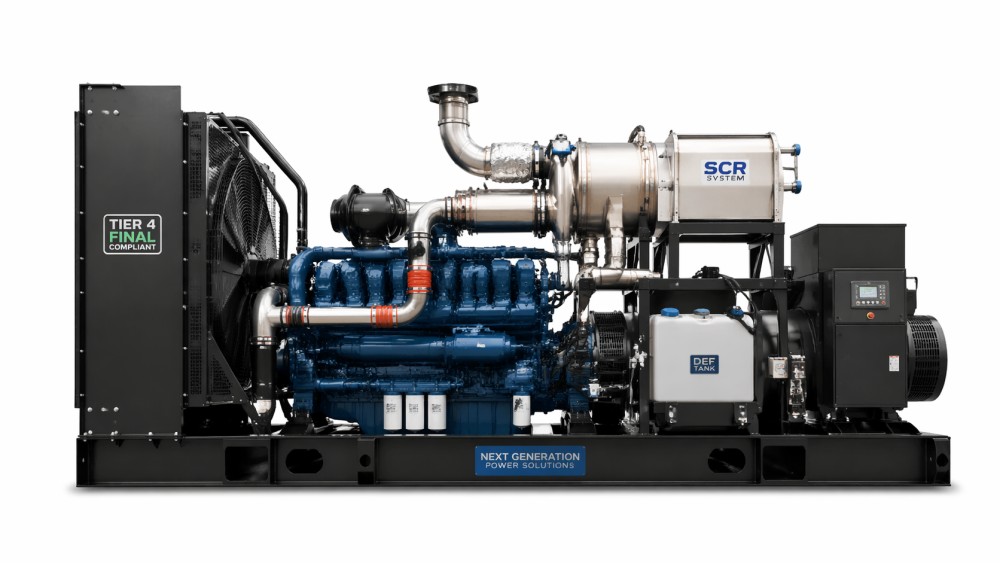
Tier 4 Final is often discussed as an engine certification topic, yet in modern gen-sets it is a full system integration challenge. Once selective catalytic reduction, diesel particulate filtration, exhaust gas recirculation, dosing control, and onboard diagnostics are added, the generator package changes significantly. Physical footprint can increase by 10%–30%, and thermal rejection may also rise, especially in enclosed installations.
That shift matters because many emergency and prime-power projects are designed around tight constraints: containerized housings, rooftop mechanical yards, marine-adjacent skids, or retrofit rooms with limited exhaust routing. A gen-set that looked acceptable at bid stage may later conflict with silencer placement, DEF tank sizing, service access clearances, or switchgear adjacency requirements.
Another reason Tier 4 Final has become more difficult is the changing operating profile of critical assets. Data center backup fleets may test weekly for 30–60 minutes but must also accept near-instant block loading during outages. Utility-support gen-sets may sit idle for long periods, then operate at high output for 8–24 hours. These duty cycles stress aftertreatment systems differently than standard factory validation conditions.
Compliance also intersects with parallel standards. IEEE-related performance expectations on transient response, harmonics, grounding, and protection coordination do not disappear because emissions hardware has been added. In marine and port-linked settings, IMO-related fuel and operational considerations can further complicate benchmarking, especially for operators comparing diesel, dual-fuel, or future-ready hydrogen and ammonia pathways.
For this reason, high-value procurement teams increasingly evaluate compliance across 4 layers: certified emissions performance, electrical performance under load, maintainability over the first 3–5 years, and asset risk under non-ideal environmental conditions such as high ambient temperatures above 40°C or low-load operation below 30% of rated capacity.
Where the risk starts in project planning
Most compliance problems are introduced long before commissioning. They begin when buyers compare kW rating, fuel rate, and purchase price, but do not ask how emissions hardware changes airflow, maintenance windows, and sensor dependency. The result is a project that is nominally compliant on paper but operationally fragile in the field.
- Underestimated enclosure heat load leading to high compartment temperature and control alarms.
- Insufficient DEF storage planning for remote sites with 30–90 day replenishment cycles.
- Service access clearances too tight for filter removal, dosing pump replacement, or catalyst inspection.
- Mismatched duty cycle assumptions between bid documents and actual site operation.
The most common Tier 4 Final compliance problems in new gen-sets
The most visible issue is aftertreatment instability at low load. Many new gen-sets spend long periods below 40% load during testing, partial occupancy, or staged commissioning. In that range, exhaust temperatures may be too low for optimal catalyst efficiency or particulate management, especially when the system is oversized relative to actual demand. That can trigger incomplete regeneration behavior, wet stacking tendencies, or repeated alarms.
A second problem is poor transient coordination between engine calibration and generator load acceptance. Emergency systems are often expected to recover frequency and voltage within seconds after a step load. However, Tier 4 Final control strategies may prioritize emissions stability and dosing logic, which can affect throttle response during sudden 50%–80% load application. If this is not tested under site-relevant conditions, operators may face performance shortfalls during a real outage.
A third issue is DEF quality and handling discipline. Diesel exhaust fluid is not mechanically complex, but contamination, freezing, poor turnover, or incorrect storage temperature can create a chain of faults. In cold regions below -11°C, thaw management matters. In hot climates above 30°C, shelf life and concentration stability can become procurement and logistics concerns. Sites that treat DEF as a minor consumable often discover reliability problems later.
Sensor dependency is another recurring pain point. Tier 4 Final architectures rely on NOx sensors, temperature sensors, differential pressure sensors, and control module communication. A single weak point can put the gen-set into a limited mode or create repeated nuisance events. For mission-critical assets, this means spare parts strategy and remote diagnostics capability should be considered from day 1, not after the first failure.
The table below summarizes frequent compliance-related failures and their likely operational consequences across industrial backup and continuous-duty environments.
The key takeaway is that the largest risks are not abstract regulatory issues. They are concrete reliability, uptime, and serviceability problems that affect maintenance budgets, acceptance testing, and contract exposure. In critical applications, even a 2-hour troubleshooting delay can be more expensive than the emissions hardware itself.
Misconceptions that distort equipment selection
Several common assumptions lead buyers in the wrong direction.
- Assuming all certified packages behave similarly under low-load and cyclical testing.
- Assuming the lowest fuel rate automatically means the lowest lifecycle cost once DEF, service access, and sensor failures are included.
- Assuming factory witness data is enough without application-specific commissioning tests.
- Assuming a compliant engine package will drop into an older enclosure or exhaust layout without redesign.
How Tier 4 Final affects procurement benchmarking and technical due diligence
For commercial evaluators, Tier 4 Final changes the scoring model. A sound benchmark should compare not only capex and nameplate rating, but also the real burden of integration and support. In many projects, 5 procurement factors explain most downstream performance: low-load stability, transient behavior, DEF logistics, serviceability, and controls maturity. Ignoring any one of them can distort total ownership cost over the first 36–60 months.
A robust technical due diligence process should ask for application-specific evidence. That includes ambient derating curves, step-load test data, expected DEF consumption at 25%, 50%, and 75% load, scheduled maintenance intervals, and the list of failure-critical emissions components. Teams should also request expected spare parts lead times, because a sensor with a 2-day replacement lead time is very different from one that takes 6–8 weeks.
Procurement benchmarking becomes even more important when project sites span different regulatory or environmental regimes. A package optimized for a temperate inland industrial site may not be ideal for a hot, humid coastal installation or a remote data center with strict uptime obligations and limited onsite technical labor. Benchmarking should therefore compare operating context, not just catalog values.
The following matrix can be used by sourcing, engineering, and compliance teams to structure a more realistic Tier 4 Final procurement review.
This kind of matrix helps teams move from brochure-based comparison to risk-based comparison. It also supports better negotiation around warranty scope, spare stock, commissioning tests, and performance acceptance clauses.
A practical 5-point due diligence checklist
- Confirm the actual site duty cycle, including average test load, expected block load, and annual run hours.
- Review enclosure thermal balance, exhaust routing, and maintenance access in a 3D or detailed layout package.
- Request emissions-related consumable planning, including DEF storage, turnover, and climate protection.
- Check the critical sensor and control parts list, with lead times and local service coverage.
- Define commissioning acceptance criteria that include both compliance and electrical performance.
Engineering and commissioning strategies to reduce compliance failures
The most effective mitigation starts with proper load profiling. If the site normally operates a gen-set at 20%–35% load for routine tests, engineers should evaluate whether load banks, alternating test sequences, or different unit sizing would better protect aftertreatment health. Oversizing for future demand can look conservative on paper, yet it often creates avoidable compliance stress during the first 2–3 years of operation.
Commissioning should also be expanded beyond basic startup. For Tier 4 Final assets, a meaningful acceptance plan includes cold start verification, low-load run validation, step-load response, alarm simulation, DEF dosing checks, and control communication confirmation. On higher-risk projects, a 3-stage commissioning path works well: factory witness review, site mechanical verification, and operational scenario testing under representative electrical load.
Another effective strategy is to align mechanical and electrical teams earlier. Emissions hardware can change backpressure, cooling requirements, and maintenance access; these in turn can influence alternator temperature, enclosure ventilation, and cable routing. When packages are reviewed in discipline silos, integration errors tend to surface late, often after civil and balance-of-plant work are already fixed.
For mission-critical installations, operators should define a first-year reliability plan before handover. That plan typically includes spare sensor inventory, DEF handling procedures, monthly alarm reviews, and a 90-day trend analysis of load, exhaust temperature, and aftertreatment events. A small investment in trending and operator training during the first 6 months can reduce recurring faults substantially.
Recommended implementation sequence
- Validate duty cycle assumptions and minimum load behavior before final equipment award.
- Review enclosure, cooling, and exhaust integration with emissions components shown in final drawings.
- Set site-specific acceptance criteria for transient performance, alarm thresholds, and service access.
- Train operators on DEF storage, low-load operation, and first-response fault handling within the first 30 days.
- Track key operational indicators during the first 90–180 days and correct calibration or procedural issues early.
Operational indicators worth tracking
At minimum, quality and reliability teams should monitor average load band, start success rate, alarm frequency per 100 operating hours, DEF consumption trend, exhaust temperature stability, and time-to-repair for emissions-related events. These indicators create a much more accurate picture of compliance readiness than a one-time commissioning certificate.
FAQ for buyers, project managers, and quality teams
How do I know whether a Tier 4 Final gen-set is suitable for low-load testing?
Ask for the minimum recommended sustained load, the expected exhaust temperature behavior below 40% load, and any required exercise procedure. If the unit will spend most of its life testing at 20%–30% load, you should also evaluate load bank support, smaller unit segmentation, or a revised maintenance schedule.
What procurement detail is most often missed?
Serviceability is one of the most overlooked details. Teams compare kW, fuel rate, and price, but forget to verify whether technicians can actually replace sensors, filters, or catalyst-related components safely inside the installed enclosure. A clearance issue that adds 3 hours to each intervention becomes a long-term operational cost.
Are Tier 4 Final gen-sets always a better choice for every industrial site?
Not automatically. They may be essential for regulatory compliance in many jurisdictions, but the best configuration still depends on duty cycle, ambient conditions, service support, fuel strategy, and criticality of the load. For some projects, the right decision is not just the engine, but the whole operating concept, including redundancy level, fuel logistics, and maintenance design.
How long should commissioning and validation take?
For standard industrial installations, site commissioning may take several days, but meaningful validation can extend to 1–2 weeks if step-load tests, alarm checks, controls integration, and operator training are included. Complex multi-unit or high-availability sites may require a longer staged process, especially when parallel operation and remote monitoring are involved.
Tier 4 Final compliance problems in new gen-sets are best understood as integration risks, not isolated engine issues. The strongest projects are those that benchmark emissions architecture, electrical performance, maintainability, and support readiness together. For decision-makers managing critical power assets, that approach reduces commissioning surprises, improves uptime resilience, and strengthens long-term asset value.
G-PPE supports this kind of decision process by connecting engine technology, power plant technology, and mechanical hardware benchmarking with practical compliance analysis across ISO, Tier 4 Final, IEEE, and IMO-linked requirements. If you are assessing a new gen-set platform, planning a retrofit, or building a procurement comparison framework, contact us to get a tailored technical benchmarking perspective and explore the most suitable solution path for your project.
- Last One:IMO regulations are shifting methanol engine design prioritiesApr 24, 2026
- Next Article:No more articles
Recommended News