
Industry News
Curation by industry experts
Hot Articles
Popular Tags
GE Vernova Validates Hydrogen Combustion in LM2500XPRESS and LM6000
GE Vernova has announced the validation of hydrogen combustion capabilities for two of its aeroderivative gas turbine platforms. Testing showed that the LM2500XPRESS can operate with a hydrogen blend of up to 50%, while the LM6000 platform demonstrated operation on 100% hydrogen.
The results provide distinct reference points for applications considering hydrogen as a turbine fuel. They also raise questions about how tested fuel capability translates into operating requirements for data center power, distributed generation and marine applications.
GE Vernova’s LM6000 platform has an installed base of approximately 1,350 units worldwide. That scale makes the platform’s pure-hydrogen demonstration relevant to discussions about existing turbine fleets, although the announcement does not establish that every installed unit can use hydrogen without modification.
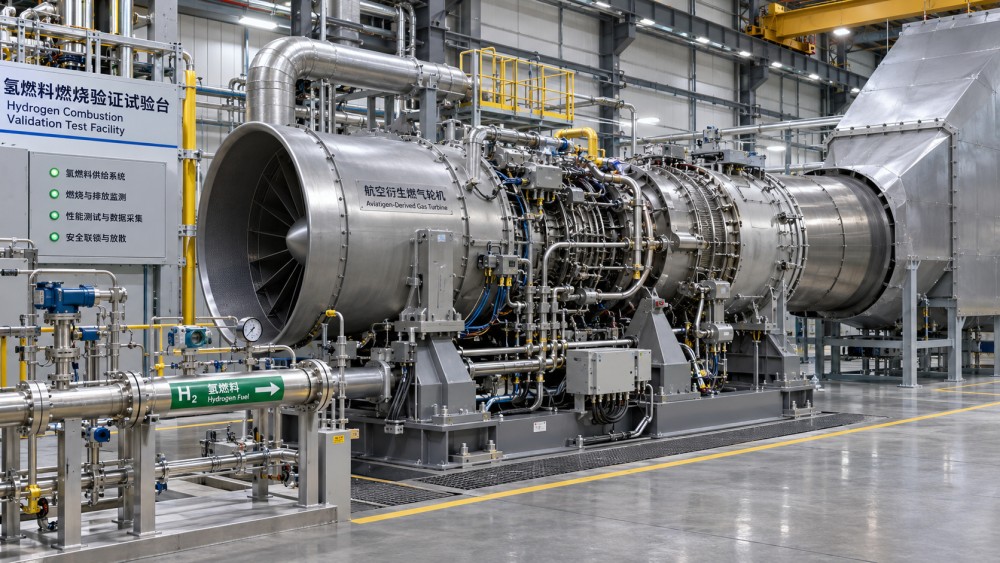
Two platforms, different hydrogen capabilities
The distinction between the results matters when evaluating potential uses. The LM2500XPRESS result concerns a blend containing up to 50% hydrogen; the LM6000 result concerns operation on 100% hydrogen. A blended-fuel capability and pure-hydrogen operation offer different potential routes for incorporating hydrogen into power generation, but neither result alone describes every operating condition under which a particular unit could use the fuel.
For a prospective user, the next question is how the demonstrated capability fits a specific application. A project considering a hydrogen blend would need to assess the fuel arrangement alongside the turbine configuration. A project interested in pure-hydrogen operation would need to understand the conditions associated with that capability and how they relate to its intended operation.
The announced results should therefore be read as platform-level validation, rather than a complete specification for every turbine or installation. Details such as the configurations tested, operating conditions and requirements for individual units would help define the practical scope of the results.
What the results mean for potential applications
For data centers considering turbines for peak power needs, the validation introduces a fuel option to evaluate alongside the requirement for dependable electricity. The direct relevance is the demonstrated ability to burn hydrogen or a hydrogen blend; whether a particular installation can use that capability depends on its power needs, equipment configuration and access to suitable fuel.
Distributed power projects face a similar connection between turbine capability and fuel availability. A validated turbine platform can form part of a proposed hydrogen-based power system, but a project’s feasibility would also depend on how hydrogen is supplied and used at the installation. The turbine result does not, by itself, establish the cost or availability of that fuel for a particular project.
Marine applications present a different setting in which the same distinction applies. The announcement identifies a potential route for using hydrogen in turbine-powered marine applications, while the requirements of an individual vessel or installation would determine how relevant either platform’s demonstrated capability is. The result does not establish that a specific vessel has adopted either configuration.
These applications share an evaluation point: the turbine’s ability to burn a fuel is one part of a wider operating decision. The validation narrows a technical question about combustion, while fuel supply and application-specific requirements remain central to any deployment decision.
The significance of the LM6000 installed base
With approximately 1,350 LM6000 units installed globally, the pure-hydrogen result has implications beyond a single prospective project. Owners and operators of existing units may have reason to follow further information about the platform, particularly whether and under what conditions the demonstrated capability could apply to equipment already in service.
Installed-base size, however, is not the same as the number of units ready for hydrogen operation. The announcement does not specify how many existing turbines match the tested configuration, what modifications might be required or which operating conditions would apply. Those distinctions matter when considering the potential reach of the result.
For operators, a useful next step would be to compare any further platform guidance with the characteristics of their own units. For new projects, the focus may instead be on the configuration available for the intended application and the fuel arrangements needed to support it. In both cases, the announcement establishes a capability to investigate, not a deployment schedule or a guaranteed retrofit pathway.
What to watch as projects are assessed
Further information about the tests and applicable turbine configurations would help turn the announced results into more specific project assessments. For the LM2500XPRESS, that includes the conditions under which blends up to 50% hydrogen can be used. For the LM6000, it includes the conditions associated with pure-hydrogen operation and the relevance of the result to individual units.
The potential emissions benefit also depends on more than the fuel used at the turbine. Hydrogen contains no carbon, but the overall emissions associated with its use depend on how it is produced and supplied. The combustion results alone therefore do not establish the lifecycle emissions of a future installation.
The announcement marks a demonstrated advance in fuel flexibility for the two platforms. Its effect on data center, distributed power and marine projects will become clearer as more information emerges about applicable configurations, operating requirements and the availability of hydrogen for those uses.
Recommended News