
Industry News
Curation by industry experts
Hot Articles
Popular Tags
China Starts Operation of 195-Kilometer Pure Hydrogen Pipeline
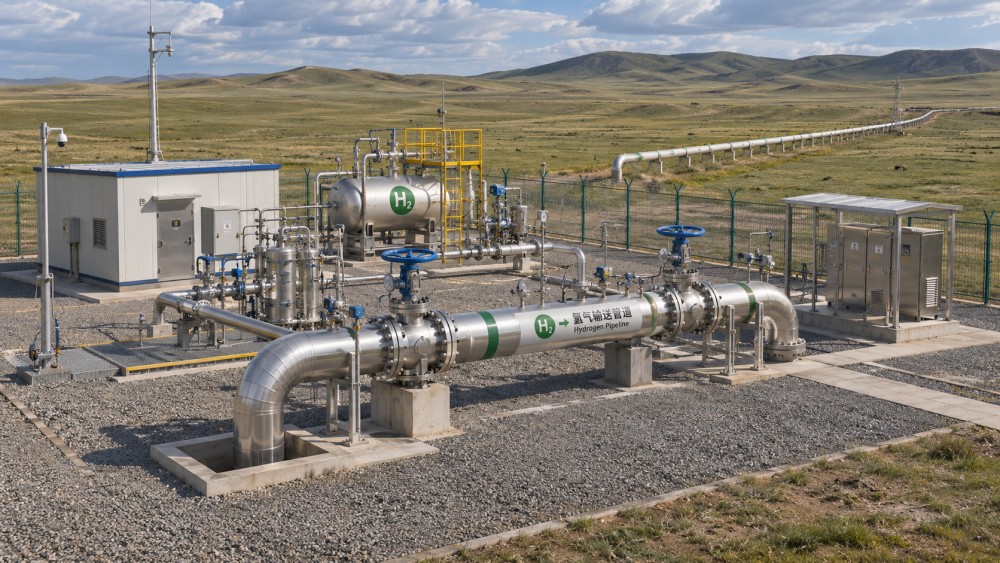
On November 19, 2026, a 195-kilometer pure hydrogen pipeline began operation between Darhan Muminggan Joint Banner in Inner Mongolia and the urban area of Baotou. It is China’s first hydrogen transmission pipeline longer than 100 kilometers, marking a step toward transporting hydrogen at scale over longer distances.
The pipeline has a design pressure of 6.3 megapascals and a nominal diameter of DN450. Its approved annual hydrogen transmission volume is 100,000 tonnes, with a longer-term capacity of up to 240,000 tonnes. The project was selected among the National Energy Administration’s first group of energy-sector hydrogen pilot projects.
What the pipeline adds to the hydrogen supply chain
The immediate significance is the opening of a dedicated route connecting hydrogen supply with a destination 195 kilometers away. A long-distance pipeline can link parts of a supply chain that would otherwise need to coordinate transportation through other arrangements. Its contribution to green hydrogen development will depend on how effectively production, transmission and consumption are brought together.
The capacity figures also need to be read carefully. The approved annual volume describes the scale for which transmission has been authorized; it does not establish how much hydrogen the pipeline is carrying at launch. Likewise, the longer-term figure of up to 240,000 tonnes is a prospective capacity, not evidence that this level has already been reached.
Where the effects may emerge
For hydrogen suppliers and users connected to the route, the practical question is how reliably supply and demand can be matched over time. Pipeline capacity creates an opportunity for larger flows, but realizing that opportunity depends on both the availability of hydrogen and demand at the receiving end.
For the wider industry, the project offers a case to watch as long-distance pure hydrogen transport moves into operation. Its launch demonstrates that a pipeline of this length has entered service; the evidence of its longer-term impact will come from how it performs and how much hydrogen it carries.
Future operating updates, including information on actual throughput and the development of connected supply and demand, would help show how far the pipeline’s approved and prospective capacity translates into use. Those developments will shape its contribution to coordination across the green hydrogen supply chain.
Recommended News