
Industry News
Curation by industry experts
Hot Articles
Popular Tags
Is high-performance thermal hardware worth the premium?
As power density, fuel flexibility, and uptime targets grow more demanding, many buyers ask whether high-performance thermal hardware truly justifies its premium. For decision-makers focused on procurement benchmarking, technical intelligence, and industrial benchmarking, the answer depends on lifecycle efficiency, compliance with IEEE standards, IMO regulations, and Tier 4 Final, as well as measurable gains across engine technology, power plant technology, and critical mechanical hardware.
In most industrial settings, the premium is worth paying only when the hardware solves a specific operational constraint: lower fuel burn, tighter emissions compliance, higher uptime, better load response, reduced maintenance risk, or longer service intervals. If those gains are material in your plant, vessel, backup power architecture, or engine platform, premium thermal hardware can deliver a strong total-cost-of-ownership advantage. If not, the added capital cost may never be recovered.
What buyers are really asking when they compare premium thermal hardware
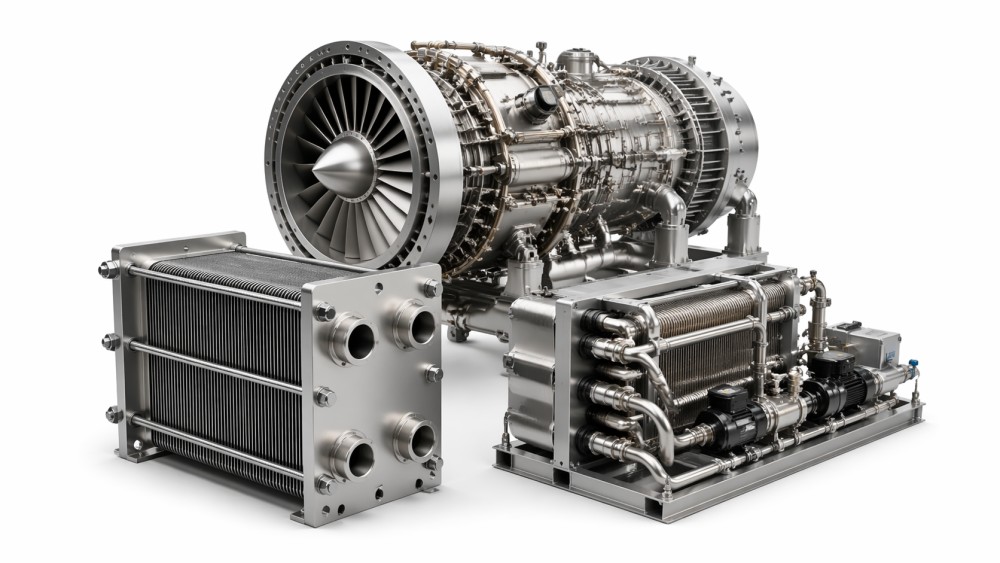
Searchers looking into whether high-performance thermal hardware is worth the premium are rarely asking a theoretical engineering question. They are usually trying to make a practical commercial decision: should we approve a more expensive engine, turbine, heat exchanger, cooling system, combustion component, insulation package, or thermal management assembly?
For B2B readers such as procurement teams, engineering leaders, project managers, and quality or safety stakeholders, the real concerns are more specific:
- Will the higher upfront price reduce operating cost over the asset lifecycle?
- Does premium hardware improve efficiency under real load conditions, not just in vendor test data?
- Will it help us meet emissions and compliance requirements more safely?
- Does it lower outage risk in critical operations such as data centers, utility backup, marine propulsion, or process industries?
- How long is the payback period under realistic duty cycles?
- Are we buying genuine performance margin, or just paying for brand positioning?
That is why the most useful way to assess premium thermal/mechanical hardware is not by nameplate performance alone, but by operational fit. The right benchmark is value under duty, regulation, and risk exposure.
When the premium usually makes financial sense
High-performance thermal hardware tends to justify its premium in environments where thermal stress, fuel cost, uptime dependency, or compliance pressure is high. In these cases, even small efficiency improvements can create large downstream savings.
Typical examples include:
- Base-load and high-utilization power systems: A small gain in thermal efficiency can produce major annual fuel savings.
- Critical backup and emergency power systems: Faster thermal stabilization, better transient response, and stronger reliability can reduce mission-critical failure risk.
- Marine and offshore applications: Premium components may improve corrosion resistance, combustion stability, and compliance with IMO-related requirements.
- Hydrogen, ammonia, or dual-fuel platforms: Advanced thermal hardware often plays a central role in combustion control, materials resilience, and heat management.
- High ambient or variable-load sites: Better thermal tolerance can preserve output and asset life under difficult conditions.
If your operation faces expensive downtime, strict emissions exposure, volatile fuel costs, or long annual running hours, premium hardware is often not a luxury purchase. It becomes a risk-management and performance decision.
What benefits matter most beyond headline efficiency
Many buyers overfocus on one number: peak efficiency. In reality, the premium case is often justified by a broader set of measurable benefits.
1. Better lifecycle efficiency
A premium burner, turbine hot-section material, cooling package, thermal barrier coating, or heat recovery component may improve not only peak efficiency but also part-load efficiency and thermal consistency over time. This matters because many industrial systems do not run at ideal design point all day.
2. Longer maintenance intervals
Higher-grade thermal hardware may reduce fouling, thermal fatigue, creep, seal degradation, or uneven wear. That can extend inspection intervals and reduce forced maintenance events.
3. Improved uptime and reliability
For data center backup power, industrial CHP, marine propulsion, or utility-scale standby systems, one avoided outage can justify a meaningful premium. Reliability value is often much larger than fuel savings.
4. Better regulatory margin
Compliance with Tier 4 Final, IEEE-related reliability expectations, or IMO frameworks is not just about passing a test once. Better thermal control can help sustain compliant operation as equipment ages or duty patterns shift.
5. Greater fuel flexibility
As hydrogen blending, ammonia pathways, synthetic fuels, and dual-fuel strategies advance, thermal hardware quality increasingly affects combustion stability, temperature control, emissions behavior, and asset durability.
Where buyers overpay without getting real value
Not every premium offering delivers meaningful return. Some upgrades are excessive for the application, and this is where disciplined benchmarking matters.
You may be over-specifying if:
- The asset runs relatively few hours per year
- Fuel cost is a small part of total operating expense
- The system rarely sees thermal cycling or demanding load shifts
- Compliance requirements are already comfortably met by standard hardware
- The maintenance strategy or operator capability cannot fully utilize the advanced design
- The vendor cannot provide credible field performance data in comparable applications
In these situations, buyers should be cautious. A premium component that offers only marginal performance improvement under your actual operating profile may look attractive in a specification sheet but fail in ROI terms.
How to evaluate premium thermal hardware the right way
For enterprise decision-makers, the best evaluation method combines technical benchmarking, commercial modeling, and operational risk review.
Start with duty-cycle reality, not brochure assumptions.
Map how the asset will actually run: base load, peaking, spinning reserve, emergency standby, marine transit, variable renewable support, or hybrid fuel mode. Thermal hardware value is highly dependent on these conditions.
Model total cost of ownership.
Include:
- Capex premium
- Fuel savings across expected load bands
- Maintenance interval changes
- Spare parts cost
- Planned and unplanned downtime risk
- Compliance risk and retrofit exposure
- Expected service life and residual asset value
Request proof from comparable installations.
Ask vendors for performance data from similar environments, fuels, ambient conditions, and operating regimes. Lab results alone are not enough for critical procurement decisions.
Check standards alignment early.
If your decision intersects with IEEE reliability expectations, IMO emissions frameworks, or Tier 4 Final requirements, ensure the hardware supports not just nominal compliance but maintainable compliance over the lifecycle.
Test maintainability and supply-chain support.
A superior component with long lead times, limited field support, or specialized servicing requirements may create hidden operating risk.
Questions procurement, engineering, and quality teams should ask vendors
To avoid vague value claims, buyers should use a sharper vendor questionnaire. Useful questions include:
- What measurable efficiency gain is achieved at 50%, 75%, and 100% load?
- How does the hardware perform under cyclic operation and thermal shock?
- What field data supports service-life claims?
- How does the design affect NOx, particulates, and combustion stability under alternative fuels?
- What are the maintenance interval differences versus standard hardware?
- What failure modes has the design specifically reduced?
- What certifications, standards, or compliance data are available?
- How quickly can replacement parts and technical support be delivered globally?
These questions help separate genuine high-performance thermal hardware from products that simply carry a premium label.
A practical decision framework: when to buy premium and when to stay standard
Choose premium thermal hardware if:
- Fuel spend is large enough that efficiency gains materially change operating economics
- Downtime carries major financial or reputational consequences
- Compliance margin is strategically important
- Your system operates in demanding thermal or environmental conditions
- You need flexibility for hydrogen, ammonia, synthetic fuels, or dual-fuel transition
- The premium can be justified through modeled payback and risk reduction
Stay with standard hardware if:
- The asset is low-utilization or lightly stressed
- Annual savings are too small to offset the premium in a reasonable period
- The application does not require advanced thermal performance
- Maintenance and support capabilities favor simpler architectures
- There is insufficient evidence of field-proven advantage
Final verdict: is high-performance thermal hardware worth the premium?
Yes, but only when assessed through lifecycle economics, compliance resilience, and uptime value rather than upfront price alone. In power plant technology, engine technology, and critical mechanical hardware applications, premium thermal hardware often creates strong value where fuel efficiency, emissions performance, and reliability are strategic. In less demanding use cases, the premium can be unnecessary.
The strongest buying decisions come from matching hardware capability to operational reality. If the premium reduces fuel burn, protects uptime, supports fuel flexibility, and strengthens compliance under IEEE, IMO, or Tier 4 Final-related demands, it is often a justified investment. If those gains cannot be clearly demonstrated in your specific duty cycle, standard hardware may be the smarter choice.
For technical benchmarking and industrial procurement, the key question is not whether premium hardware is better in theory. It is whether it delivers measurable advantage in your real operating environment.
Recommended News