
Industry News
Curation by industry experts
Hot Articles
Popular Tags
Comparing Gas Turbine Options by Power Output, Fuel Flexibility, and Load Profile
Choosing a turbine package by nameplate capacity alone is a common procurement mistake. A unit that looks competitive on rated megawatts can become a poor fit once fuel availability changes, ambient conditions reduce output, or the plant spends most of its life at partial load rather than full baseload operation. For buyers comparing gas turbine options, the real question is not simply “how much power does it make,” but “under what conditions, on which fuel, and across what operating pattern does it make that power reliably and economically?”
That distinction matters in industrial captive power, CHP plants, peaking facilities, remote installations, and process-driven sites where demand swings by shift, season, or production schedule. Procurement teams are often asked to compare proposals that look similar on headline efficiency and output, yet differ sharply in startup characteristics, turndown behavior, maintenance intervals, fuel treatment needs, and emissions implications. A structured comparison helps prevent overbuying capacity, underestimating operating constraints, or selecting a machine whose strengths do not match the site.
Power output is only meaningful when tied to site conditions
Rated output is usually presented under reference conditions. In practice, actual delivered power depends on ambient temperature, elevation, inlet losses, exhaust backpressure, and auxiliary loads. A machine that appears appropriately sized on paper may fall short during hot-weather operation or at high-altitude sites, exactly when demand is most critical.
Procurement teams should ask vendors to state expected output and heat rate under the project’s real operating envelope rather than only under ISO-type reference conditions. That means reviewing:
- Expected summer and winter ambient temperature ranges
- Site elevation and humidity effects
- Inlet filtration pressure loss and degradation margin
- Exhaust system configuration, especially for CHP or heat recovery applications
- Electrical auxiliaries and mechanical accessories that consume part of gross output
This is especially important when comparing turbines across small, medium, and larger output classes. A smaller unit may offer better load matching and less part-load penalty for variable operations, while a larger machine may show attractive full-load economics but force the plant into inefficient cycling or low-load running. For procurement, the “best” power class is often the one that aligns with the site’s most frequent operating point, not its highest theoretical peak.
Fuel flexibility changes both commercial risk and technical complexity
Fuel flexibility sounds straightforward until the details are examined. Many industrial buyers want optionality between natural gas and liquid fuel, or they need a system that can tolerate varying gas composition from associated gas, refinery off-gas, landfill gas, or other site-specific sources. The commercial benefit is obvious: reduced exposure to single-fuel disruption and more operating options when pricing or supply conditions shift. The technical implications are less simple.
A turbine designed for a narrow fuel specification may require additional conditioning, pressure control, filtration, heating, or blending when the actual gas stream varies. Liquid fuel backup may support continuity, but it can also add storage, treatment, atomization, safety, and emissions compliance requirements. Fuel flexibility is valuable only when the full balance of plant can support it.
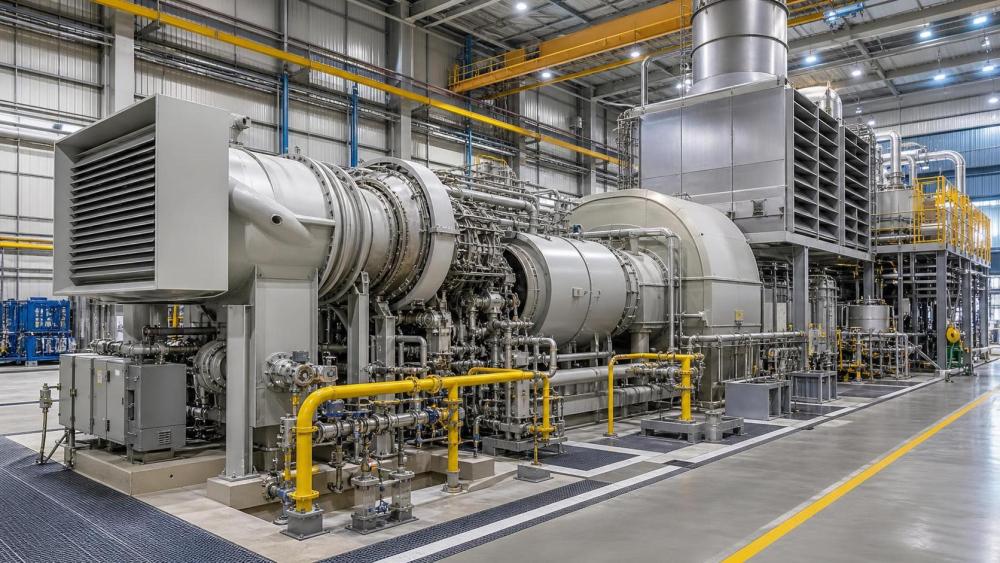
When reviewing a Gas Turbine selection path, buyers usually benefit from comparing not only primary fuel type but also the permitted range of fuel properties, changeover method, combustion system limits, and any derating associated with alternate fuels. Those factors affect operability as much as the turbine core itself.
Questions that deserve early clarification include whether the unit can switch fuels online or only during shutdown, whether fuel contaminants demand upstream cleanup, and whether warranty terms change under non-standard fuel use. A proposal with broad fuel claims but many conditional exclusions may create more risk than a narrower but clearly defined fuel envelope.
Load profile often decides lifecycle value more than peak efficiency
Peak efficiency attracts attention because it is easy to compare. Yet many sites do not operate at peak load for long periods. A facility with daily starts and stops, deep load swings, spinning reserve duty, or intermittent renewable balancing needs a machine that behaves well away from its design point. In those cases, the load profile can matter more than the best published full-load heat rate.
Buyers should map expected annual operation into practical categories:
- Continuous baseload with few interruptions
- Two-shift or three-shift industrial following duty
- Frequent start-stop peaking service
- Emergency standby with low annual hours but high readiness requirements
- CHP operation where thermal demand can force electrical load decisions
Each pattern stresses different attributes. Baseload users usually focus on sustained efficiency, maintenance intervals, and long-term parts strategy. Peaking and flexible plants pay closer attention to startup time, ramp rate, thermal fatigue exposure, and inspection frequency under cycling duty. Process plants may care most about load stability and recovery from trips because production losses can outweigh fuel savings.
Part-load performance deserves close review. Some turbines maintain acceptable efficiency and emissions across a broad operating window; others become noticeably less attractive once they spend significant time below rated output. For procurement teams, a unit with slightly lower peak efficiency but stronger performance at 60 to 80 percent load may produce a better annual result if that is where the plant typically runs.
Comparing simple cycle, CHP, and integrated site needs
The same turbine can look very different depending on whether the project is power-only or heat-integrated. In simple-cycle service, electric efficiency and dispatch behavior dominate. In CHP service, exhaust energy recovery can shift the economics, making total site energy utilization more important than electrical efficiency alone.
If steam or hot water demand is stable, a turbine with suitable exhaust characteristics may outperform an alternative that looks better in pure electrical terms. On the other hand, if thermal demand is highly variable, the plant may need bypass capability, supplementary firing evaluation, or a control philosophy that prevents the thermal side from forcing inefficient electrical dispatch.
Procurement documents should define whether the priority is electric output, steam generation, process reliability, black-start support, or fuel optionality. Without that hierarchy, vendors may optimize proposals around different assumptions, making bid comparison misleading.
What procurement teams should verify beyond the brochure
Technical brochures are useful for screening, but they rarely expose the issues that drive post-award friction. Buyers should request a project-specific technical deviation list and review operating assumptions line by line. Several areas are often underexamined during early comparison:
Guaranteed versus expected performance
There is a major difference between a guaranteed value under contractual conditions and an expected value based on typical operation. Procurement should separate firm guarantees, correction curves, and assumptions tied to fuel quality or ambient conditions.
Maintenance concept and outage planning
Equivalent operating hours, starts-based inspection triggers, hot-section intervals, and spare parts philosophy all influence cost and downtime. A turbine suited to steady baseload may become expensive in a cycling plant if starts accumulate faster than expected.
Auxiliary system scope
Fuel gas boosting, liquid fuel skids, lube oil systems, inlet cooling, fire protection interfaces, and emissions equipment can materially affect total installed cost. Comparing turbine packages without normalizing auxiliary scope often produces a distorted result.
Controls and plant integration
Fast response, islanding capability, grid code compliance, and integration with existing DCS or plant power management systems can be decisive. Retrofit projects in particular should evaluate control compatibility early rather than treating it as a later engineering detail.
Typical trade-offs by operating scenario
Commercial evaluation should reflect operating reality
Purchase price is only one layer of the decision. A more realistic commercial comparison includes fuel consumption over the expected duty cycle, outage costs, major inspection timing, consumables, and the site impact of lost availability. In some process industries, a single forced outage during critical production can outweigh incremental differences in machine efficiency.
Bid evaluation models should also account for how the selected turbine affects upstream and downstream systems. A fuel-flexible design may reduce supply risk but require more complex treatment equipment. A high-output unit may reduce the number of machines needed, but increase single-point-of-failure exposure. A compact package may simplify installation, while a less familiar configuration may complicate spare parts planning or operator training.
These are not reasons to avoid advanced or larger-capacity options. They are reasons to compare them on a common functional basis. Procurement performs best when technical and commercial scoring reflect the site’s actual dispatch logic rather than generic assumptions borrowed from another project.
Common selection errors that are easy to avoid
One recurring mistake is treating all megawatts as equal regardless of climate and fuel. Another is assuming dual-fuel capability automatically solves fuel risk without checking the added systems required to use the backup fuel safely and within emissions limits. A third is evaluating maintenance only by calendar interval instead of by both operating hours and starts.
It is also common to understate the effect of future operating change. A plant that starts as baseload may later move into load-following service because of utility tariff changes, seasonal demand swings, or the addition of renewable power on site. If that possibility exists, buyers should test whether the shortlisted turbine remains acceptable under a wider range of load behavior.
A practical comparison framework for buyers
Procurement teams usually get better results when they compare options in four layers. The first is site fit: output under real ambient conditions, available fuel, emissions constraints, and integration with plant utilities. The second is operational fit: baseload, cycling, CHP, standby, or mixed duty. The third is support fit: maintenance philosophy, parts logistics, and outage planning. The fourth is commercial fit: installed cost, fuel cost under expected dispatch, and risk cost tied to downtime or fuel disruption.
That framework keeps the conversation grounded in use case rather than brochure ranking. It also helps explain why two buyers can rationally choose different turbines for projects with similar nominal capacity. A refinery cogeneration unit, a remote mining plant, and a merchant peaker may all require similar output, yet the right selection logic for each will differ sharply.
For purchasers, the most defensible gas turbine decision is rarely the one with the best single number. It is the one whose output, fuel capability, and load behavior remain credible under the plant conditions the machine will actually face.
Recommended News