
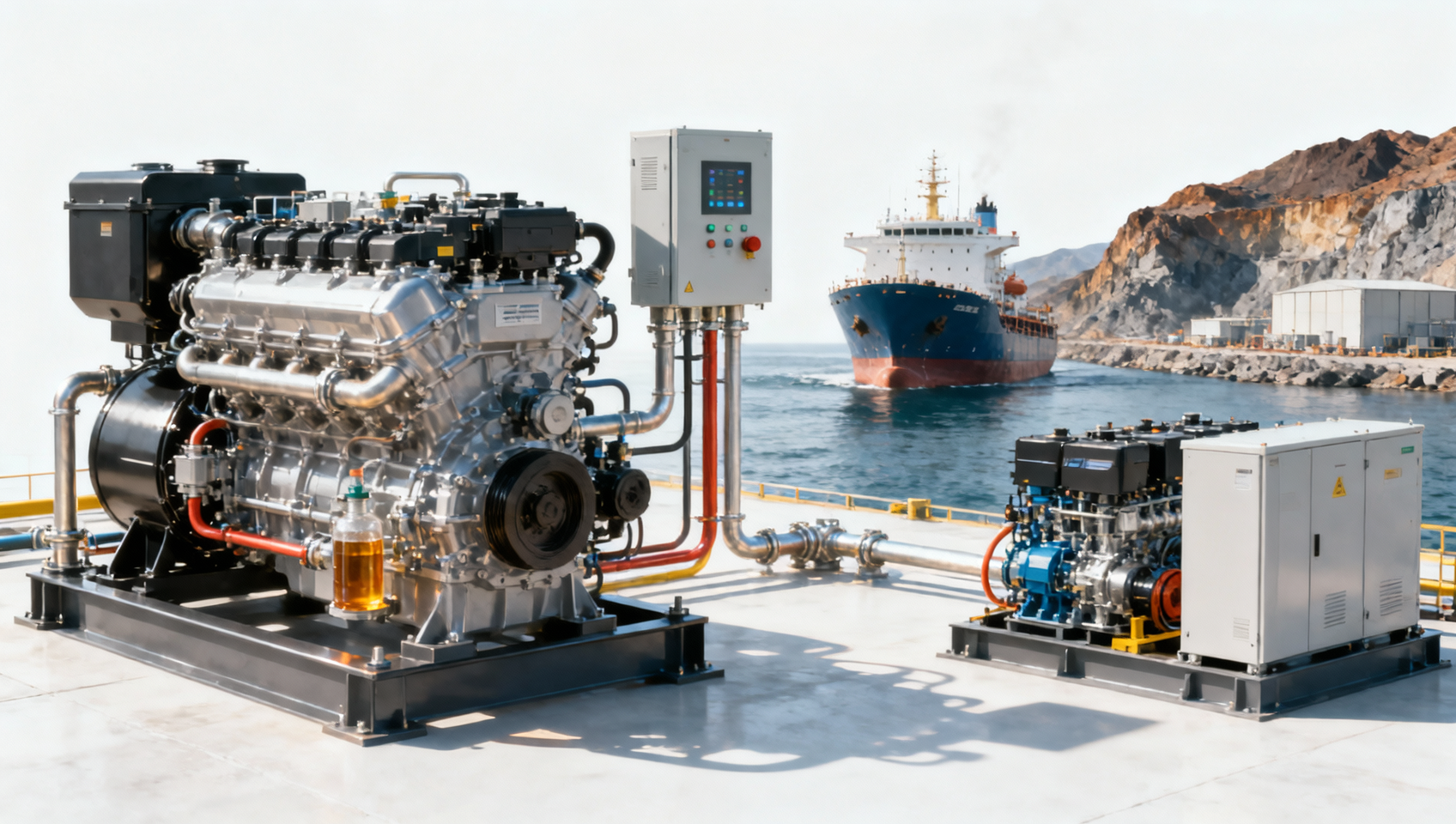
Dual Fuel Engines Knowledge Hub
Dual fuel engines have become a critical evaluation topic for marine operators, power project developers, procurement teams, and technical managers because they connect fuel flexibility, emissions strategy, lifecycle cost, and uptime resilience in one asset decision.
This topic hub brings together G-PPE coverage into reusable decision-stage modules so readers can move from foundational understanding to technical review, application fit, maintenance risk, commercial comparison, and final investment judgment with stronger SEO relevance and clearer E-E-A-T signals.
Foundations and Market Context
This reusable module introduces what dual fuel engines are and why demand is expanding across shipping and distributed power. It works well as the first reading layer for users who need both concept clarity and market relevance before moving into deeper technical or commercial analysis.
What Are Dual Fuel Engines and How Do They Work in Industrial Applications?
This article explains the core operating logic of dual fuel engines, how fuel switching works, and why industrial buyers treat them as a strategic power asset rather than a simple engine variant.
What Is Driving Demand for Dual Fuel Engines in Shipping and Distributed Power?
Readers can use this piece to understand the commercial, regulatory, and operating pressures that are making dual fuel engines more attractive in shipping and distributed power projects.
Technical Performance and Compliance
This module supports E-E-A-T by grounding the topic in measurable performance criteria and compliance realities. It is useful for engineering reviewers, spec writers, and quality teams that need decision content backed by technical behavior and emissions context.
Dual Fuel Engines Explained: Power Output, Efficiency, Methane Slip, and Load Response
This technical breakdown reviews the metrics that matter most when benchmarking dual fuel engines, including power output, efficiency behavior, methane slip risk, and response under changing load conditions.
How Emissions Rules Influence Dual Fuel Engines in Marine and Stationary Power Projects
This article shows how emissions rules shape engine selection, fuel pathway decisions, and compliance planning for marine and stationary power projects using dual fuel engines.
Application Planning
This section helps readers connect the technology to real operating environments. It improves readability by moving from theory into scenario-based judgment, showing where dual fuel engines make practical sense and how use case changes the selection framework.
Where Dual Fuel Engines Make Sense: Best Use Cases in Marine, Mining, and Power Generation
This guide maps the strongest application scenarios for dual fuel engines and explains how fuel access, duty cycle, and operating environment affect project suitability.
How to Choose Dual Fuel Engines for Marine Power, Backup Power, or Continuous Duty
Use this article to compare how dual fuel engines should be assessed across marine propulsion, backup power, and continuous-duty operations with different reliability and cost priorities.
Operations and Troubleshooting
A reusable topic page should also support post-purchase readers. This module adds operational depth by helping users diagnose common issues and understand the maintenance checkpoints that influence uptime, safety, and lifecycle performance.
Common Problems with Dual Fuel Engines and What to Check First
This troubleshooting article highlights common failure patterns in dual fuel engines and gives readers a practical first-check framework for finding likely causes quickly.
Dual Fuel Engines Maintenance Checklist: Ignition, Gas Supply, Lubrication, and Controls
This maintenance checklist focuses on ignition quality, gas supply stability, lubrication health, and controls integrity to help operators protect dual fuel engines uptime.
Evaluation and Project Selection
This module is designed for comparison-stage readers who are narrowing options. It strengthens commercial E-E-A-T by framing the topic through real tradeoffs such as diesel substitution, retrofit justification, and project approval logic.
Dual Fuel Engines vs Diesel Engines: Key Differences in Fuel Use, Emissions, and Cost
This comparison helps readers evaluate dual fuel engines against diesel alternatives by examining fuel use, emissions performance, and cost implications in a decision-ready format.
Dual Fuel Engines for Newbuilds vs Retrofits: Which Option Is Easier to Justify?
This article compares how dual fuel engines are justified in newbuild and retrofit scenarios, helping project teams understand where approval barriers and value drivers differ.
Procurement and Investment Decisions
This final module supports late-stage buyers, finance reviewers, and procurement teams. It improves the page’s decision value by focusing on capital planning, payback logic, maintenance cost exposure, and prime-power investment defensibility.
Buying Dual Fuel Engines: CAPEX, Fuel Savings, Maintenance, and Payback Factors
This buying guide breaks down the financial inputs that matter most for dual fuel engines, including CAPEX, fuel savings assumptions, maintenance burden, and payback timing.
Are Dual Fuel Engines Worth It for Prime Power? A Cost and Reliability Breakdown
This article helps decision-makers judge whether dual fuel engines are commercially justified for prime power by balancing reliability expectations with long-term operating economics.
 What Are Dual Fuel Engines and How Do They Work in Industrial Applications?Dual fuel engines explained: learn how they work in industrial applications, improve fuel flexibility, support uptime, and help balance emissions, cost, and resilience.
 Dual Fuel Engines vs Diesel Engines: Key Differences in Fuel Use, Emissions, and CostDual fuel engines vs diesel engines: compare fuel flexibility, emissions, and lifecycle cost to find the smarter choice for marine, industrial, and backup power operations.
 How to Choose Dual Fuel Engines for Marine Power, Backup Power, or Continuous DutyDual fuel engines selection guide for marine power, backup power, and continuous duty. Compare fuel flexibility, emissions, reliability, and lifecycle cost to choose smarter.
 Dual Fuel Engines Explained: Power Output, Efficiency, Methane Slip, and Load ResponseDual fuel engines explained: compare power output, real-world efficiency, methane slip, and load response to choose cleaner, more reliable systems for marine, industrial, and backup power.